
The Gap Between Practice Pads and People


To start out, if you've read any of my other blog posts, you're already aware that I was a medic previous to starting up this business. One thing I learned about myself at a young age is that I am not a book learner. What I mean is if I can feel and handle and put my physical hands on something to learn, I can learn pretty much anything. It's likely why I was so successful in paramedic school and caught on quickly, while in high school I struggled to retain the information.
Different Tools for Different Stages
Learning styles are different for every person and as such, training options should also be varied. The Amazon, AliExpress, and drop-shipped skins have their place. When you're first starting out as a tattoo artist, you get your first affordable machine and set of needles and inks and some cheap fake skins and that's how you find out if tattooing is even something you want to do. You learn if you have the patience and the creativity to make your own designs. You learn the weight and hand positioning and angles of your machine. You learn what is a comfortable hand position to reduce fatigue and you can use ballpoint cartridges to practice your steadiness with your hands before even trying a fake skin.
All of these training tools have their uses and place in the industry and are the industry standard for apprentices first starting out for a reason. You don't want to spend $30 on a single skin when it's likely going to end up in a drawer or the trash cause you're still learning the basics.
Bridging the Gap
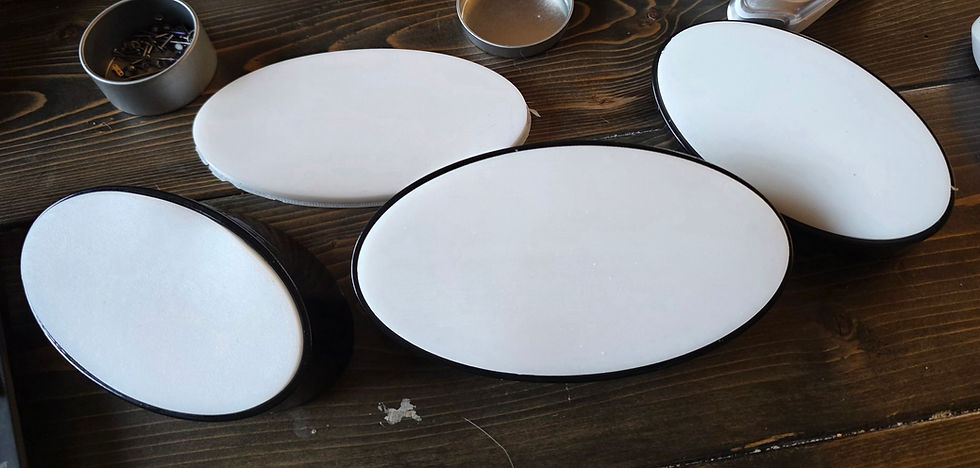
The skins I've designed are made to bridge the gap between cheap skins that sweat oil, get yellow and brittle over time, or just feel like a solid piece of rubber that can be difficult to get stencils and ink to take properly. These skins are designed for the apprentices and artists who want to challenge themselves on technique and skill before touching a client's skin.
The cheaper fake skins show you what your lines look like on a solid single piece of rubber and train you visually. These new skins teach you through not only visual response but tactile response. These skins are designed for tactile feedback; not only will you see when you get too deep, but you will physically feel a change in your machine and your hand when you've gone too deep. You'll see the blowout under the pad. This teaches not only visual feedback on your technique but also creates muscle memory.
Technical Precision and Feedback
For the majority of the human body, you want to deposit ink approx. 1.5-2mm deep. These skins are designed with that exact depth in mind. If you move deeper than 2mm, you will instantly know it. These skins are 4mm depth in total so you'll know when you've gone too deep without needing to hit the table underneath and potentially burr your needles.
The stretch of human skin vs cheap practice silicone is wildly different. Most silicone skins on the market have no stretch to them at all or if they do, they don't rebound to their original position like real human skin does. With my proprietary silicone blend, you get to practice an actual stretch on these skins. It builds good habits before you ever get close to a client, with an actual feedback on the silicone skin instead of pretending your fingers are actually stretching like you might do on the thinner cheaper skins.
Surface Texture and Options
Human skin isn't perfectly smooth, so why are artists practicing on perfectly smooth surfaces before going to the real, textured thing? Now, I’m not going to claim these feel exactly like a human being—nothing does. But I’ve worked to move away from that "glass-smooth" finish you find on most mass-produced skins.
Practicing on a perfectly slick surface doesn't prepare you for the natural topography and friction of real tissue. I’ve developed custom textures for these skins to give you a surface that has some "bite" and variation to it. It’s about giving you a different, more realistic texture to practice on that is closer to the real thing, not just a flat piece of plastic.
That said, I know every artist has a preference for how they like to work, so these skins are dual-sided. If you prefer that smooth, glossy surface for certain techniques or displays, you can just flip the pad over and work on the back. Just keep in mind that because of the way the material is cast, that glossier, smooth back side has slightl less stretch and blowouts visually than the textured skin-mimicry side. You get the choice of which challenge you want to tackle that day—whether you need the realistic give of the textured side or the steadier resistance of the smooth side.
A Tool Built to Last
To be clear, these skins aren't designed for when you're first starting. They're more expensive and higher quality platinum cure silicone that will last for decades. No yellowing, no drying out, no silicone oil seepage, and no falling apart over time. These aren't the skins you want to buy to just throw away and not look at again. These are the skins you'll want to keep to show your work, to challenge yourself and to keep practicing good habits before and in between actual clients.
Still not sure?
That's why I've designed my Fuck Around and Find Out pads to be a bit more affordable to make, which makes it more affordable for you to purchase. Try out the smaller skin first before committing to a larger pad and see the difference in your training for yourself.
Also, every first time customer will receive a Free Fuck Around and Find Out pad with their first purchase of an Apprentice Skin. I want to make sure you have a chance to feel out your voltage, hand speed, and technique on my silicone before you start on your larger Apprentice Skin.


Comments